Cost Action 22167
Repository
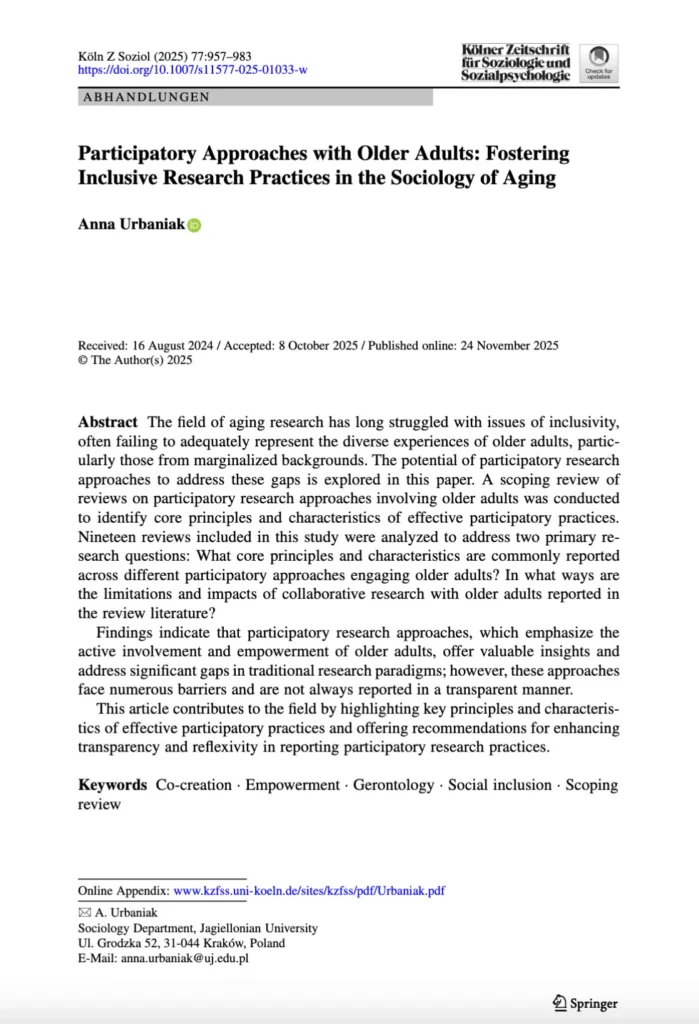
Urbaniak, A. (2025). Participatory Approaches with Older Adults: Fostering Inclusive Research Practices in the Sociology of Aging. Köln Z Soziol, 77, 957–983.
https://doi.org/10.1007/s11577-025-01033-w
The field of aging research has long struggled with issues of inclusivity, often failing to adequately represent the diverse experiences of older adults, particularly those from marginalized backgrounds. The potential of participatory research approaches to address these gaps is explored in this paper. A scoping review of reviews on participatory research approaches involving older adults was conducted to identify core principles and characteristics of effective participatory practices. Nineteen reviews included in this study were analyzed to address two primary research questions: What core principles and characteristics are commonly reported across different participatory approaches engaging older adults? In what ways are the limitations and impacts of collaborative research with older adults reported in the review literature? Findings indicate that participatory research approaches, which emphasize the active involvement and empowerment of older adults, offer valuable insights and address significant gaps in traditional research paradigms; however, these approaches face numerous barriers and are not always reported in a transparent manner. This article contributes to the field by highlighting key principles and characteristics of effective participatory practices and offering recommendations for enhancing transparency and reflexivity in reporting participatory research practices.
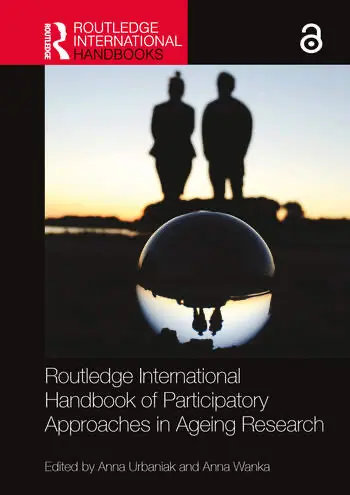
Urbaniak, A., & Wanka, A. (Eds.). (2023). Routledge International Handbook of Participatory Approaches in Ageing Research (1st ed.). Routledge.
https://doi.org/10.4324/9781003254829
This Handbook presents established and innovative perspectives on involving older adults as co-creators in ageing research. It reorients research and policy toward more inclusive and adequate designs that capture the voices and needs of older adults. The Handbook: introduces types of participatory approaches in ageing research; highlights key methodological aspects of these approaches; gives insights from projects across different cultural contexts and academic disciplines, showing ways in which older participants can be involved in co-designing different stages of the research cycle; examines key issues to consider when involving older participants at each step of the research process; includes the voices of older adults directly; draws out conclusions and points ways forward for future research. This Handbook will be essential reading for researchers and students interested in the field of ageing and/or participatory methods, as well as for those policy stakeholders in the fields of ageing and demographic change, social and public policy, or health and wellbeing who are interested in involving older adults in policy processes. It will be useful for third-sector advocacy organizations and international non-governmental and public agencies working either in citizen involvement/participation or the ageing sector.

This report compiles nine examples of participatory research and practice with older adults submitted to the PAAR-Net Policy & Practice Repository. Each example demonstrates innovative, inclusive and cross-sector approaches to ageing, wellbeing, and participation.

This set of practical guidelines and useful tips on applying participatory approaches with
older adults steam from our project SEVEN: Socially Excluded Older Adults: Voices and Ex-
periences that was funded by FWF Top Citizen Science initiative under the grant number
TCS 84 Top Citizen Science.

Willeke van Staalduinen
During the Summer of 2025, desk research, a survey and interviews were conducted to learn more about the experiences and needs of stakeholders and practitioners in applying participatory approaches with older adults. Stakeholders in these activities are defined as individuals working in fields such as policymaking, ICT, education, health and social care, leisure and sports, and housing who deliver products, services, and policies to and for older adults.

This paper was co-created by members of the PAAR-Net network through a collaborative process involving cross-country workshops, participatory discussions with older adults, and synthesis of lived experience, policy reviews, and case study analysis. It reflects shared insights from academics, practitioners, policymakers, and older adults.
Read the headlines for policymakers


This White Paper was co-created by over 30 researchers and practitioners from 14 countries, drawing on 12 case studies exploring participation with migrants, Indigenous elders, and marginalised older adults in diverse community contexts; cross-country workshops bringing together academics, practitioners, policymakers, and older adults; participatory discussions with older people from migrant, Indigenous, rural, and minority communities; and it synthesises lived experiences, policy reviews, and practical examples to provide actionable insights for community-level change.
Read the headlines for policymakers


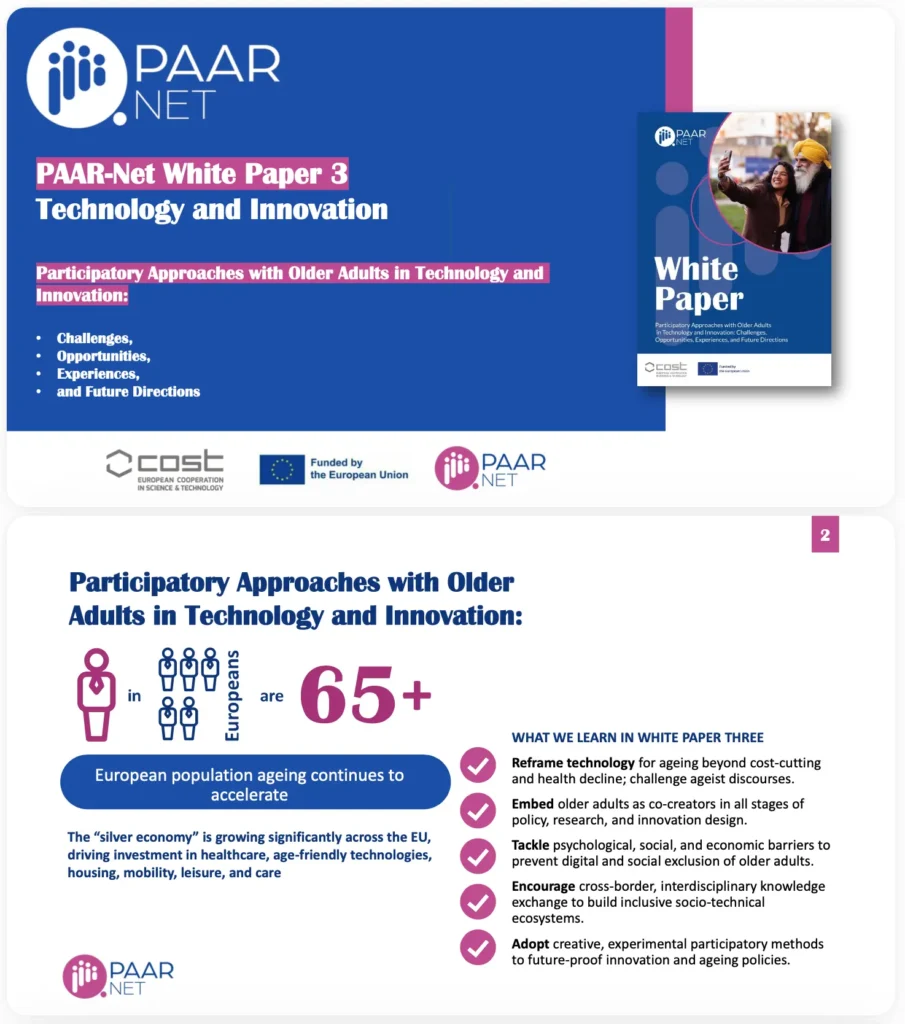
This White Paper advocates for strengths-based, co-creative approaches in health and care systems. It addresses ageism, power imbalances, and the need for inclusive language and training.
Read the headlines for policymakers


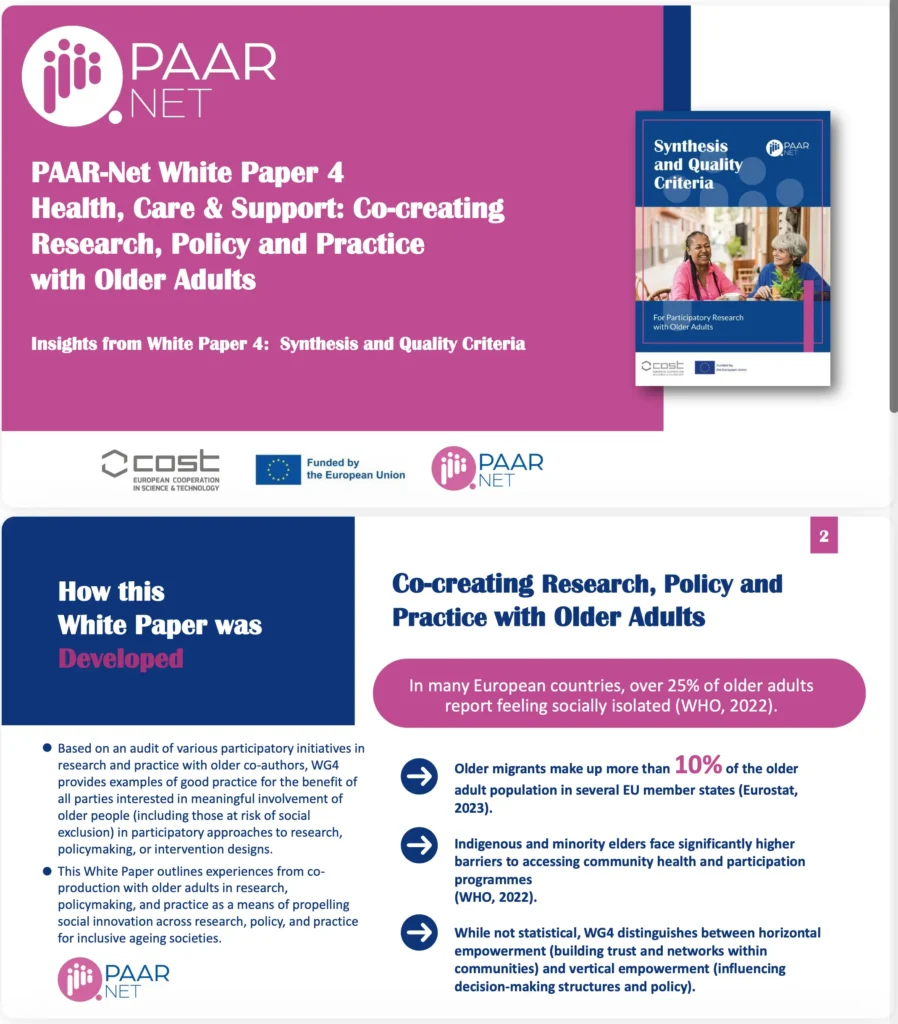
This White Paper outlines experiences from co-production with older adults in research, policymaking and practice as a means of propelling social innovation across research, policy and practice for inclusive ageing societies.
Read the headlines policymakers


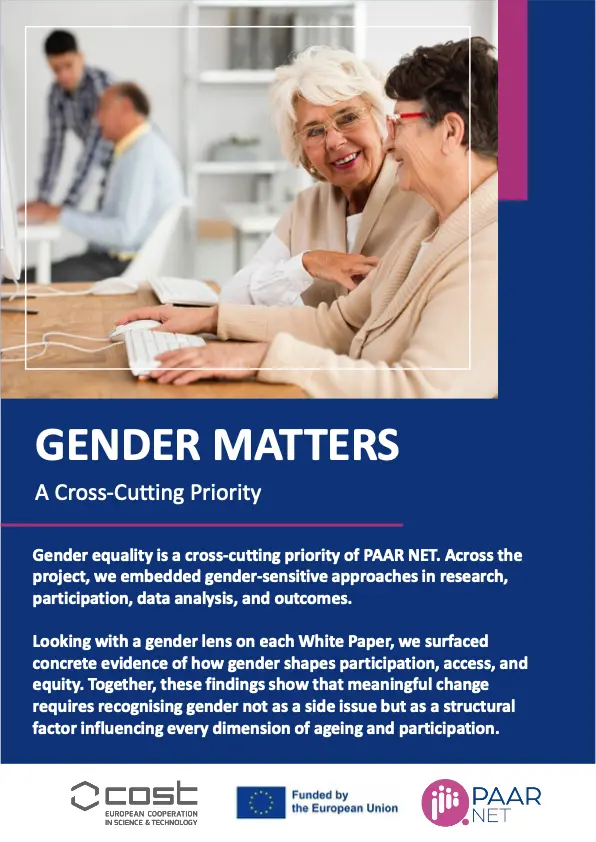
Gender equality is a cross-cutting priority of PAAR NET. Across the project, we embedded gender-sensitive approaches in research, participation, data analysis, and outcomes. Looking with a gender lens on each White Paper, we surfaced concrete evidence of how gender shapes participation, access, and equity. Together, these findings show that meaningful change requires recognising gender not as a side issue but as a structural factor influencing every dimension of ageing and participation.